
Digital vs. Pen-and-Paper Preparation: Which Is Better for CAT?
Preparing for the Common Admission Test (CAT) is a thrilling adventure that demands nothing less than your full dedication, strategy, and enthusiasm! In today's tech-driven world, the battle between digital and pen-and-paper preparation rages on. Which one will lead you to victory? Let’s dive into this epic showdown to help you make the best choice for your journey!
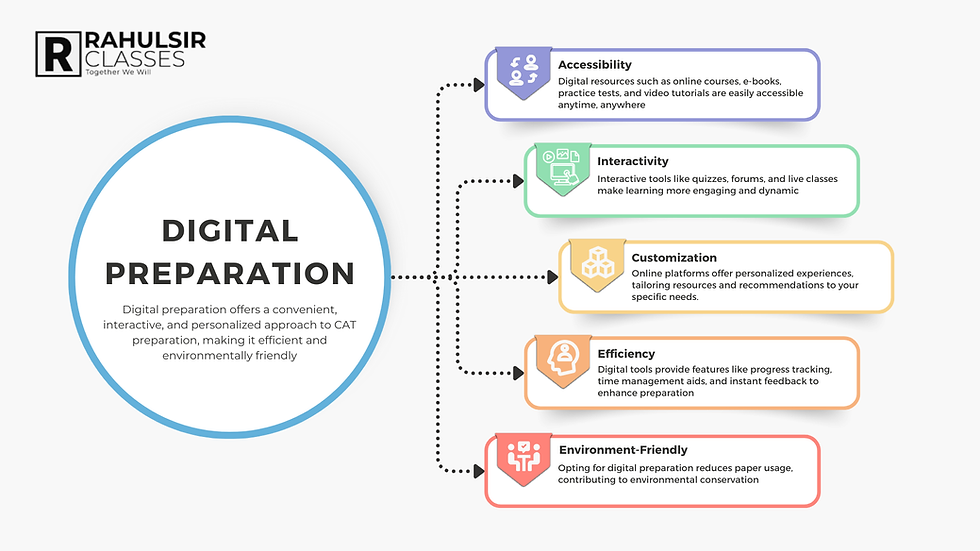
Digital Preparation
Advantages:
Accessibility: Imagine having a treasure trove of resources—online courses, e-books, practice tests, and video tutorials—all just a click away! Rahul sir’s online portal, for instance, offers an extensive collection of practice questions and video explanations.
Interactivity: Get ready to be engaged like never before with interactive tools such as quizzes, forums, and live classes that bring concepts to life. Platforms like Rahul sir’s classes allow you to participate in live problem-solving sessions and discussions.
Customization: Personalization is key! Online apps and websites, like Rahul sir’s resources, adapt to your unique strengths and weaknesses, optimizing your preparation for maximum impact.
Efficiency: Stay on top of your game with digital tools that offer progress tracking, time management, and instant feedback.
Environment-Friendly: Go green with digital preparation, significantly reducing paper usage and helping the environment.
Disadvantages:
Distractions: The internet is a double-edged sword, with endless distractions lurking around every corner. Stay focused, warrior!
Health Issues: Prolonged screen time can lead to eye strain, headaches, and poor posture. Remember to take breaks and stay healthy.
Technical Issues: Technology can be fickle, with software glitches, internet connectivity problems, and battery drainage. Be prepared for the unexpected.
Pen-and-Paper Preparation
Advantages:
Focus: Traditional methods foster deep concentration, keeping digital distractions at bay.
Retention: Writing by hand engages different cognitive processes, improving memory retention and comprehension. Rahul sir often emphasizes the importance of handwritten notes for better understanding.
Tactile Learning: For some, the physical act of writing enhances understanding and recall.
Less Strain: Pen-and-paper methods eliminate the risk of digital eye strain and other health issues.
Disadvantages:
Limited Resources: Accessing a vast array of materials can be cumbersome and expensive compared to digital alternatives.
Lack of Interactivity: Traditional methods lack the interactivity and instant feedback that digital tools provide.
Environmental Impact: Extensive use of paper contributes to deforestation and environmental degradation.
Conclusion
In the end, the choice between digital and pen-and-paper preparation depends on your personal preference, learning style, and lifestyle. Why not embrace a hybrid approach that combines the best of both worlds? For instance, you can use Rahul sir’s digital portal for interactive learning and rely on handwritten notes for better retention.
Remember, the goal is not just to work hard, but to work smart. Take advantage of expert guidance from Rahul sir’s classes, where you can practice analytical questions, refine your concepts, and receive personalized feedback.
Embark on your CAT preparation journey with confidence! Join Rahul sir’s classes today for a balanced and effective learning experience. Whether digital, pen-and-paper, or a hybrid approach, make the most of the resources available and enjoy the ride to success.


Comments